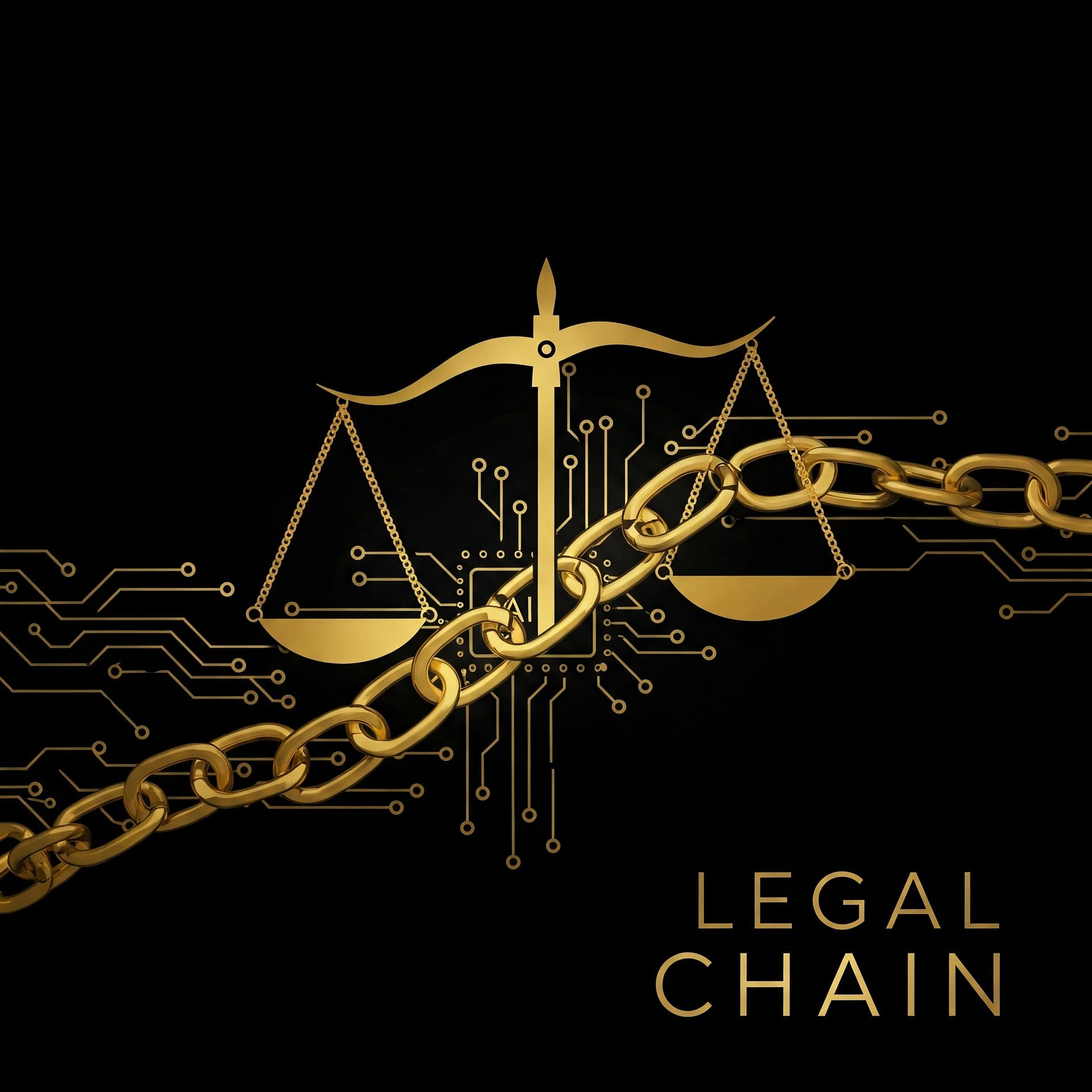
Why Blockchain Is the Future of Law
Blockchain is transforming law by enabling immutable records, audit trails, and document integrity. Learn why it’s foundational to the future of legal work.


Law Is Built on Trust — Blockchain Reinforces It
Law depends on trust, integrity, and verifiability. Contracts must be authentic. Records must be accurate. Timelines must be provable. For centuries, these assurances relied on institutions, intermediaries, and paper trails, now blockchain holds the keys!
Blockchain technology introduces a new trust layer for legal systems — one that is cryptographically verifiable, tamper-evident, and auditable by design. As legal work becomes increasingly digital, blockchain is emerging not as a replacement for lawyers or courts, but as critical infrastructure for modern legal workflows.
What Is Blockchain (In Legal Terms)?
At its core, a blockchain is a distributed, immutable ledger. Once data is recorded and confirmed, it cannot be altered without detection.
From a legal perspective, blockchain provides:
- Immutability: Records cannot be silently changed
- Timestamping: Proof of when something existed
- Integrity verification: Cryptographic proof that a document is authentic
- Decentralization: Reduced reliance on single custodians of records
These properties align directly with how law evaluates evidence, authenticity, and chain of custody.
The Core Legal Problems Blockchain Solves
1. Document Integrity & Tamper Evidence
Traditional digital files can be edited, overwritten, or replaced without leaving a clear trail. Blockchain allows a hash of a legal document to be anchored on a ledger, creating verifiable proof that:
- The document existed at a specific time
- The content has not been altered
- Any modification can be detected immediately
This is especially relevant for contracts, NDAs, IP records, compliance documents, and regulatory filings.
2. Audit Trails & Accountability
Legal compliance increasingly demands traceability:
- Who created a document?
- Who reviewed it?
- What changes were made — and when?
Blockchain creates immutable audit logs that strengthen governance, risk management, and compliance obligations without relying solely on internal system logs.
3. Cross-Border Legal Trust
Global transactions often span jurisdictions with different legal systems, enforcement standards, and trust assumptions.
Blockchain provides a neutral, verifiable record layer that:
- Supports international agreements
- Reduces disputes over authenticity
- Enhances confidence between parties who may not share the same legal infrastructure
4. Evidence Preservation & Litigation Support
Courts already accept digitally preserved evidence — but blockchain strengthens evidentiary credibility by:
- Proving document existence at a given time
- Supporting chain-of-custody arguments
- Reducing challenges around spoliation or manipulation
This makes blockchain particularly valuable in commercial litigation, IP disputes, employment matters, and regulatory investigations.
Smart Contracts: Automation, Not Replacement
Smart contracts are often misunderstood. They do not replace legal agreements — they execute specific, pre-defined logic automatically.
In practice, smart contracts can:
- Trigger payments when conditions are met
- Enforce deadlines or penalties
- Reduce operational friction in routine transactions
However, they still rely on traditional legal contracts for interpretation, context, and dispute resolution. The future of law is hybrid: legally drafted agreements paired with blockchain-based execution and verification.
Why Blockchain Matters More as AI Enters Legal Workflows
AI is accelerating legal drafting, review, and analysis. But AI introduces new risks:
- Version ambiguity
- Accountability gaps
- Explainability concerns
Blockchain complements AI by providing:
- Proof of document state at every stage
- Immutable records of AI-assisted decisions
- Governance frameworks for responsible legal AI use
As AI scales legal work, blockchain ensures trust scales with it.
Adoption Is Already Underway
Blockchain adoption in law is not theoretical. It is already being used for:
- Contract integrity verification
- Digital notarization
- Regulatory recordkeeping
- IP timestamping
- Compliance audit trails
Courts, regulators, and enterprises increasingly recognize blockchain records as supporting evidence, particularly when paired with established legal processes.
Blockchain Will Not Replace Lawyers — It Will Strengthen Legal Systems
Blockchain does not remove judgment, advocacy, or interpretation. Instead, it:
- Reduces administrative risk
- Enhances transparency
- Strengthens evidentiary confidence
- Improves trust between parties
The future of law is not decentralized chaos — it is digitally reinforced credibility.
Trust Is the Foundation of Law — Blockchain Is the Infrastructure
As legal work becomes faster, more digital, and more global, trust must be built into systems, not assumed.
Blockchain provides the legal industry with something it has always valued but never fully automated:
verifiable truth.
That is why blockchain is not a trend in law — it is foundational infrastructure for the next era of legal work.
Frequently Asked Questions
What does blockchain actually do for legal documents?
Blockchain can store a cryptographic fingerprint (hash) of a document with a timestamp. That makes it possible to verify the document existed at a certain time and detect whether the content has changed since it was anchored.
Does blockchain make a contract “legally binding”?
No. A contract is generally binding because it satisfies legal requirements (like offer, acceptance, consideration, capacity, and legality), not because it’s on a blockchain. Blockchain can strengthen proof of integrity and timing, but it doesn’t replace legal enforceability requirements.
Are smart contracts the same as legal contracts?
Not usually. Smart contracts are code that automatically executes predefined actions when conditions are met. Legal contracts are written agreements interpreted under law. Many real-world implementations use both: a traditional legal agreement plus smart contract automation for specific obligations.
How does blockchain help with audit trails and compliance?
Blockchain can provide tamper-evident logs of key events (e.g., when a document version was finalized or approved). This can complement internal system logs by adding a verifiable, time-stamped record that is difficult to alter without detection.
Can blockchain records be used in court?
Blockchain records can support evidentiary arguments (like proving existence at a certain time and detecting tampering). Whether and how they’re admitted depends on jurisdiction, rules of evidence, authentication, and the surrounding facts and documentation.
What’s the difference between storing a document on blockchain vs. anchoring it?
Anchoring typically means storing a hash (a fingerprint) on-chain while keeping the full document off-chain (e.g., in secure storage). This approach can reduce privacy risks and costs while still enabling integrity verification.
Is blockchain secure and private for sensitive legal files?
Security depends on design choices. Many legal implementations avoid placing sensitive content on-chain and instead store only hashes and timestamps. Privacy, access control, encryption, and retention policies should be handled off-chain in secure systems.
Why does blockchain matter more as AI is used in legal work?
AI can speed up drafting and review, but it can also create versioning and accountability challenges. Blockchain can help by providing tamper-evident checkpoints for document states and key workflow events, improving traceability and governance.
