What Is Integrity-Minded Verification? Blockchain Anchoring in Plain English
Integrity-minded verification means a signed legal document is both honestly made and permanently provable. Legal Chain achieves this through two layers. First, AI drafting in plain language so both parties understand what they agreed to. Second, SHA-256 blockchain anchoring so neither party can later deny what was in the document. No technical knowledge required to understand or verify it. Anyone can check it independently without relying on Legal Chain’s systems.

Integrity-minded verification is not a technical feature. It is a design philosophy. Every document should be clear enough to understand and permanent enough to prove. Photo: Unsplash / Shubham Dhage
The Problem It Solves
Legal documents fail in two ways.
First, they fail at the moment of signing because the person signing does not understand what they agreed to. The language is complex. The obligations are buried. The risk is invisible until it is too late to negotiate.
Second, they fail after signing because someone disputes what the document said. A version discrepancy. A claimed amendment. A counterparty who insists the terms were different. Without independent proof of the document’s exact contents at execution, the dispute becomes a credibility contest rather than an evidence question.
Integrity-minded verification addresses both failures. That is the idea behind the term. Not just verification. Not just blockchain. A philosophy that says: every document should be understood at signing and provable for as long as it matters.
The Two Layers
AI drafting in plain language. Every clause explained so both parties understand what they are agreeing to before the signature is applied. A document no one understands cannot protect anyone.
SHA-256 blockchain anchoring. The exact document content is fingerprinted and recorded permanently on a public ledger. Any alteration is immediately detectable by anyone.
Together, these two layers produce something that neither plain language alone nor blockchain alone delivers: a document that is genuinely understood when signed and genuinely provable when disputed.
What SHA-256 Fingerprinting Actually Means
You do not need to understand cryptography to understand this. You just need one analogy.
Every person has a unique fingerprint. If you change a single ridge, the fingerprint changes entirely. The fingerprint cannot be used to reconstruct the person’s face. But comparing two fingerprints tells you immediately whether they came from the same person. SHA-256 does the same thing for documents. Every document produces a unique 64-character string. Change a single character and the string changes completely. The string cannot be reversed to reconstruct the document. But comparing two strings tells you immediately whether the documents are identical.
Here is a simple demonstration of how sensitive the function is.
Two completely different hashes. One word changed. That is the sensitivity that makes SHA-256 useful for document verification.
Furthermore, the hash is one-way. You cannot work backwards from the hash to reconstruct the document. That means recording the hash publicly does not expose the document’s contents. The document stays private. The proof of its integrity is public.
How the Blockchain Makes the Fingerprint Permanent
Computing a SHA-256 hash proves what a document contained at a specific moment. But that proof only holds if you can trust the record of the hash itself.
That is where the blockchain comes in.
A blockchain is a public ledger maintained by thousands of independent computers simultaneously. Every new entry is linked to the previous entry using cryptography. Altering any historical record would break every subsequent link and be immediately visible to every node in the network.
No single organization controls the blockchain. Not Legal Chain. Not the parties to the agreement. Not any government. Altering a record would require simultaneously corrupting the majority of thousands of independent copies, which is computationally and economically infeasible.
So when Legal Chain records a document’s SHA-256 hash on the Ethereum blockchain, that record is permanent. It does not depend on Legal Chain remaining in business. It does not depend on either party’s server staying online. It exists independently of everyone involved in the agreement.
The Full Process, Step by Step
Legal Chain’s AI generates the agreement from a plain-English description of the relationship. Both parties can read and understand every clause before signing. This is the clarity layer.
The document is reviewed, negotiated if needed, and executed electronically. Under the ESIGN Act and UETA, the electronic signature is legally binding across all US jurisdictions.
The Trust Layer calculates the SHA-256 hash of the exact executed document. This is a mathematical representation of every character in the file, computed in milliseconds.
The hash is submitted as a transaction to the Ethereum blockchain. The network confirms the transaction and returns a block number and transaction hash as a permanent public reference. This is the integrity layer.
To verify the document later, compute its current SHA-256 hash using any standard tool and compare it to the on-chain record. A match confirms the document is unchanged. A mismatch proves it was altered. No access to Legal Chain’s systems required.
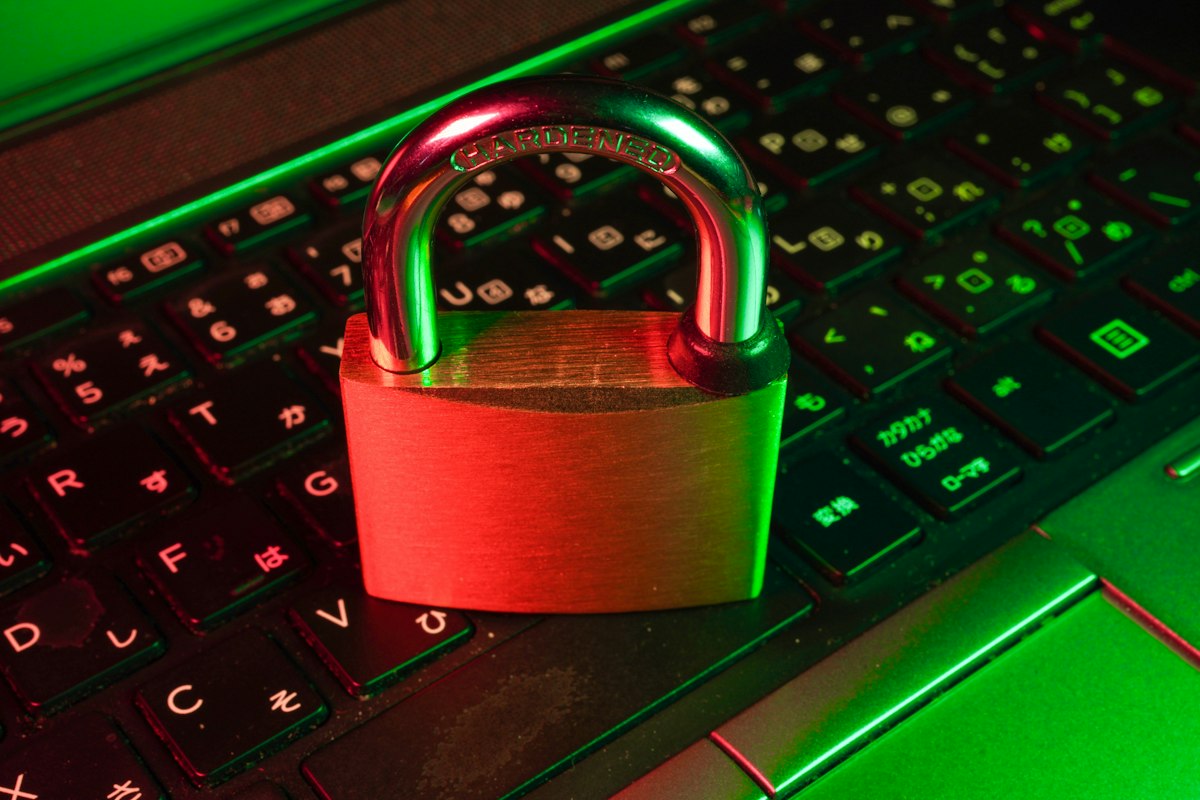
The verification is self-serve. Any party with the document and the on-chain hash can confirm integrity without contacting Legal Chain, the counterparty, or anyone else. Photo: Unsplash / Milad Fakurian
Why This Matters in a Dispute
Consider the scenario where a counterparty claims the contract said something different.
Without integrity-minded verification, this becomes a credibility contest. Each party presents their copy. Nobody can prove conclusively which version was actually signed. The dispute proceeds on he-said-she-said terms.
With integrity-minded verification, the answer is immediate. Compute the SHA-256 hash of each party’s copy. Compare both to the Ethereum record. The one that matches is the original. The one that does not was altered after execution. That is not an argument. That is proof.
“Integrity-minded verification is not about distrust. It is about giving both parties the same permanent reference point so that trust does not need to be argued about after the fact.”
What It Is Not
A few clarifications, because blockchain generates misconceptions.
Blockchain anchoring does not make the document tamper-proof. Nothing prevents someone from editing a file. What it does is make any editing immediately detectable. The distinction matters: tamper-proof is not achievable for digital files. Tamper-evident is.
Furthermore, the blockchain record is not legal notarization. It is a technical integrity signal. It proves what the document contained at a specific moment. It does not certify who the parties are, whether the agreement is legally valid, or whether the terms are enforceable. Those questions require legal analysis by a professional.
Legal Chain is software, not a law firm. Integrity-minded verification supports legal enforceability by establishing document integrity. It does not replace professional legal judgment for the questions that require it.
Every document. Clearly written. Permanently provable.
Plain language AI drafting plus blockchain-anchored integrity verification. Try it free during beta. No credit card required.
See the Trust LayerFrequently Asked Questions
What is integrity-minded verification?
Legal Chain’s two-layer approach to document trust. Layer one is clarity: AI drafting in plain language so both parties understand what they agreed to. Layer two is permanence: SHA-256 blockchain anchoring so neither party can deny what the document said. Together they produce a document that is honestly made and permanently provable.
What is blockchain anchoring for a legal document?
Recording a SHA-256 fingerprint of the executed document on a public blockchain. If any character in the document is changed after anchoring, the fingerprint computed from the altered version will not match the on-chain record. This mismatch is detectable proof of tampering, verifiable by anyone without relying on Legal Chain’s systems or either party’s records.
Does blockchain anchoring store my document publicly?
No. Legal Chain records only the SHA-256 fingerprint on the blockchain, not the document itself. The fingerprint cannot reconstruct the document. The actual document is stored in AES-256 encrypted off-chain storage, accessible only to authorized users. Documents remain completely private while their integrity is publicly and permanently verifiable.
Why is blockchain better than a digital timestamp for proving document integrity?
A digital timestamp relies on a single trusted authority. A blockchain record is maintained by thousands of independent nodes simultaneously on a public ledger no single organization controls. Altering it would require corrupting the majority of thousands of independent copies simultaneously, which is computationally infeasible. The independence is what makes it the stronger integrity signal.
What is a SHA-256 hash?
A cryptographic function that converts any input into a unique 64-character string. Change a single character and the string changes completely. The hash cannot be reversed to reconstruct the original document. These three properties — uniqueness, sensitivity, irreversibility — make SHA-256 the standard for document fingerprinting in blockchain verification. Learn more at legalcha.in/services/trust-layer.
Disclaimer
This article is published for general informational purposes only and does not constitute legal advice. Legal Chain is a technology platform and is not a law firm. The Trust Layer is a technical service and does not constitute legal certification or notarization. Use of Legal Chain does not create an attorney-client relationship. For specific legal matters, consult a licensed attorney in your jurisdiction. Legal Chain currently supports US jurisdictions only.
Discover more from Legal Chain
Subscribe to get the latest posts sent to your email.
Try Legal Chain Free Today
Draft, analyze, and protect your contracts with AI. No credit card required.
View pricing Legal Chain is a technology platform. Not legal advice.
