The Role of Integrity Signals in Contract Trust: How to Prove a Document Has Not Been Altered
An integrity signal is any mechanism that proves a document has not been changed since a specific point in time. Four signals exist for legal agreements: access logs, version history, digital signatures, and blockchain-anchored cryptographic hashes. Each is stronger than the last. Only the fourth is independently verifiable without trusting any single organization. Legal Chain’s Trust Layer provides that fourth signal for any document you store, sign, or share on the platform.
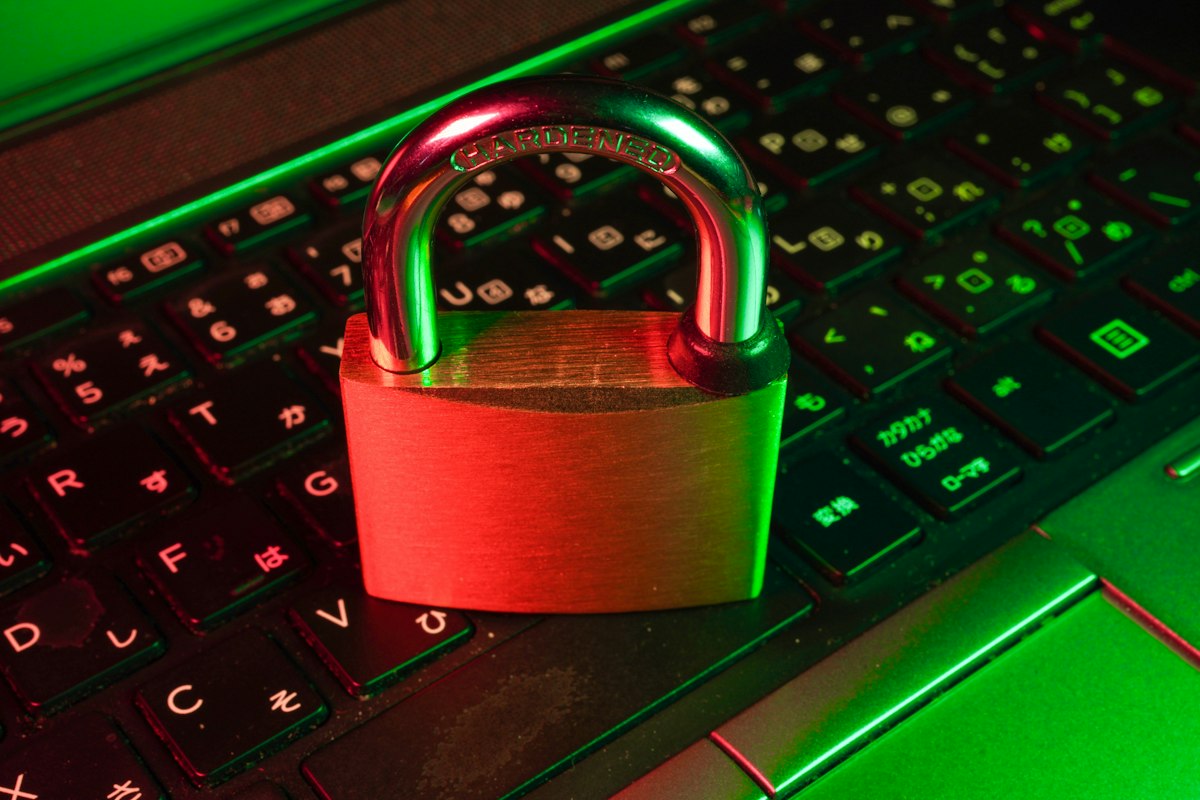
Trust in a legal document is not binary. It is a function of the integrity signals attached to it. Some signals are stronger than others. This article explains each one. Photo: Unsplash / Milad Fakurian
Why “I Have a Signed Copy” Is Not Always Enough
The moment a contract dispute begins, both parties reach for their copy of the agreement.
That is when the problem surfaces. Maybe the copies do not match. Maybe one party claims the signed version is different from the one they agreed to. Maybe a clause appears in one copy that does not appear in the other.
The legal system does not resolve this by guessing. It resolves it by evidence. And the evidence question is: which party can prove their version is the one that was actually signed?
Without an integrity signal, neither can.
Integrity signals are mechanisms that prove a document has not been altered since a specific moment. They range from weak to strong. Understanding the difference determines whether you can win a dispute over document authenticity, or simply hope the other party does not raise one.
The Four Integrity Signals, Ranked
Here is each signal in order of strength, with its specific limit.
Access logs record who viewed or edited a document and when. They are better than nothing. They provide a basic trail of activity around a file and can establish that a document was accessed or modified by a specific person at a specific time.
But access logs have a fundamental limit. They are stored in systems controlled by one of the parties to the dispute. An administrator with privileged access can alter or delete log entries. In a dispute, the opposing party will correctly point out that the logs are maintained by the organization asserting their accuracy. That reduces their evidential weight significantly.
Version history in a document management system tracks changes between drafts, records who made them, and preserves previous versions for retrieval. It is more structured than access logs and can answer the question “what changed between this version and that one.”
The same fundamental problem applies, however. Version history lives in a system controlled by one party. A determined insider can manipulate it. Furthermore, version history only covers documents stored in the system. A version sent by email, downloaded locally, or copied to an external drive exists outside the tracked history entirely.
A digital signature, distinct from a simple click-to-sign electronic signature, cryptographically binds a signer’s private key to a hash of the document at the moment of signing. Hashing alone proves that content has not changed; it does not say who approved it. That is where digital signatures and seals come in. If the document is altered after signing, the hash no longer matches and the signature is invalidated. Any validation tool immediately shows the signature as broken.
Digital signatures are a strong integrity signal. But they depend on the certificate authority that issued the signing key. That authority is a single trusted third party. If the certificate expires, the authority is compromised, or the verification infrastructure changes, the signal weakens. Furthermore, not all contracts are signed with cryptographic digital signatures. Most are signed with simple electronic signatures that do not provide this protection at all.
A blockchain-anchored cryptographic hash records a SHA-256 fingerprint of the document on a public ledger maintained by thousands of independent nodes simultaneously. No single organization controls the record. No insider can alter it retroactively. And any party can verify it independently, without contacting Legal Chain, the signing parties, or any other organization.
A tamper-evident seal on a contract ensures that the terms agreed upon are immutable, barring any unauthorized alterations that could lead to legal and financial repercussions. The blockchain record is the digital equivalent of that seal, applied at the moment of execution and permanent from that point forward.
This is the only integrity signal that is verifiable without trust in any single party. That independence is precisely what makes it the strongest available signal for legal documents.

A blockchain-anchored hash is verified by thousands of independent nodes. No single administrator, organization, or party to the dispute controls the record. That independence is what makes it the strongest integrity signal available. Photo: Unsplash / Shubham Dhage
A Scenario That Shows Why This Matters
Here is a specific situation where integrity signals make the difference between a winnable dispute and an unresolvable one.
A vendor delivers a software platform six months into a 12-month service agreement. The client claims the delivered platform does not meet the specifications in the contract. The vendor produces a copy of the signed agreement that includes a clause limiting delivery requirements. The client produces their copy of the same agreement, which does not include that clause.
Both parties have a “signed copy.” Neither has an independent integrity signal. The dispute proceeds to arbitration, where neither party can prove conclusively which version was actually agreed to. The outcome turns on witness credibility rather than document evidence.
With a blockchain-anchored integrity signal, the SHA-256 hash recorded at the moment of signing resolves the dispute immediately. One version matches the on-chain fingerprint. The other does not. That mismatch is proof. The arbitration is over in one filing.
“In the digital age, the integrity of documents is paramount. The act of altering documents can have severe repercussions, not only undermining the trustworthiness of the business but also potentially leading to legal consequences.”
Tamper-Evident vs. Tamper-Proof: Why the Distinction Matters
These two terms are often confused. Understanding the difference is important for anyone selecting a document integrity solution.
Tamper-proof means a document cannot be altered under any circumstances. This does not exist for digital files. Any digital document can be edited by someone with the right software access. The file format is not the protection.
Tamper-evident means any alteration is immediately detectable. This is achievable. A SHA-256 hash is unique to the exact document content. Change a single character and the hash changes completely. Compare the current hash to the one anchored at execution, and any modification is immediately visible.
Legal Chain’s Trust Layer creates tamper-evident records. That is the correct and achievable standard for legal document integrity. It does not prevent someone from editing a file. It ensures that any editing is immediately provable and instantly detectable by any party with access to the original hash and the current document.
How Legal Chain Creates the Strongest Integrity Signal
Legal Chain’s Trust Layer provides all four integrity signals together, with blockchain anchoring as the strongest and most independent layer.
Every view, edit, upload, and share is recorded in an audit log that cannot be altered or deleted. This provides the first integrity signal, covering the complete chain of custody from the moment the document is uploaded.
Every draft and redlined version is preserved. The version that was executed is clearly identified. No version can be overwritten or deleted. This provides the second integrity signal, covering the document’s evolution from draft to execution.
When a document is executed, the Trust Layer computes a SHA-256 fingerprint of the exact document content. Any subsequent alteration to the document will produce a different fingerprint that does not match this one.
The SHA-256 hash is recorded as a transaction on the Ethereum blockchain, returning a block number and transaction hash as the permanent public reference. This provides the fourth and strongest integrity signal: independently verifiable by anyone, controlled by no one.
Any party, including a counterparty, auditor, or court, can verify the document’s integrity by computing its current SHA-256 hash and comparing it to the Ethereum transaction record. No access to Legal Chain’s systems is required. No trust in Legal Chain is required. The verification is public and permanent.
Legal Chain is software, not a law firm. It does not provide legal advice. The Trust Layer is a technical service and does not constitute legal certification or official notarization. For complex disputes or matters requiring professional legal opinion on document authenticity, consult a licensed attorney. Legal Chain currently supports US jurisdictions.
Give every contract the strongest integrity signal available.
Upload any agreement. Legal Chain anchors it to Ethereum with SHA-256 fingerprinting. Verifiable by anyone, controlled by no one. Try it free during beta.
See the Trust LayerFrequently Asked Questions
What is an integrity signal in a legal document?
Any mechanism that proves a document’s contents are unchanged since a specific point in time. Four categories exist in increasing strength: access logs, version history, digital signatures, and blockchain-anchored cryptographic hashes. Only the fourth is independently verifiable without trusting any single party. Legal Chain’s Trust Layer provides all four, with blockchain anchoring as the strongest layer.
Can an electronic signature prove a document has not been altered?
A cryptographic digital signature can: it binds the signer’s private key to a document hash at the moment of signing. If the document is subsequently altered, the hash no longer matches and the signature is invalidated. A simple click-to-sign electronic signature does not provide this protection. Blockchain anchoring adds an independent layer on top of either signature type.
Why is blockchain the strongest integrity signal for legal documents?
Because it is the only mechanism independently verifiable without trusting any single party. Access logs, version histories, and digital signature certificates are all maintained by organizations with an interest in the dispute outcome. A blockchain hash is recorded on a public ledger maintained by thousands of independent nodes simultaneously. No single party controls it. Altering it is computationally and economically infeasible.
What is the difference between tamper-evident and tamper-proof?
Tamper-proof means a document cannot be altered under any circumstances. This is not achievable for digital files. Tamper-evident means any alteration is immediately detectable. This is achievable through cryptographic hashing: if any character changes after anchoring, the SHA-256 hash of the altered document will not match the one recorded on the blockchain, proving tampering immediately. Legal Chain creates tamper-evident records, which is the correct and achievable standard.
How does Legal Chain’s Trust Layer create an integrity signal?
In five steps: immutable access logs covering the document’s chain of custody; complete version history identifying the executed version; SHA-256 hash computed at execution; blockchain anchoring of that hash on Ethereum as a permanent public record; and self-serve verification that any party can perform without contacting Legal Chain. Learn more at legalcha.in/services/trust-layer.
Disclaimer
This article is published for general informational purposes only and does not constitute legal advice. Legal Chain is a technology platform and is not a law firm. The Trust Layer is a technical service and does not constitute legal certification or official notarization. Use of Legal Chain does not create an attorney-client relationship. For advice regarding document authenticity in a specific dispute, consult a licensed attorney in your jurisdiction. Legal Chain currently supports US jurisdictions only.
Discover more from Legal Chain
Subscribe to get the latest posts sent to your email.
Try Legal Chain Free Today
Draft, analyze, and protect your contracts with AI. No credit card required.
View pricing Legal Chain is a technology platform. Not legal advice.
