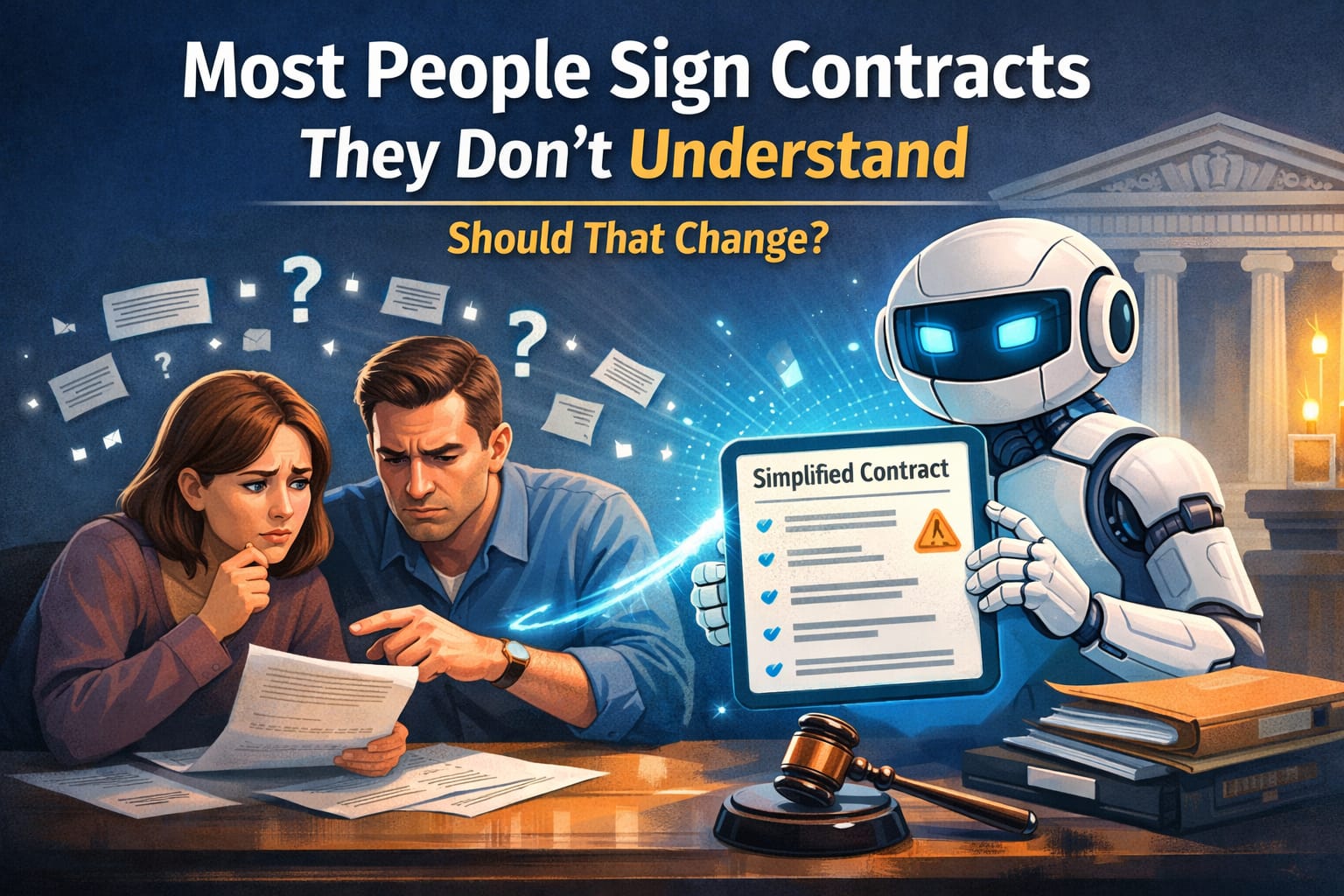
Hot Take: Most People Sign Contracts They Don’t Understand
Here’s a reality that many people quietly accept: Most people sign contracts they don’t fully understand.
Not because they’re careless. Not because they’re irresponsible. But because legal language was never designed for normal humans.
From apartment leases and employment agreements to startup NDAs and business partnerships, contracts govern much of modern life. Yet the average person often signs these documents with only a partial understanding of what they actually say.
So the real question becomes: Should that change?
Why Legal Language Became So Complex
Legal language—often referred to as legalese—developed over centuries of court decisions, statutes, and legal traditions. Lawyers rely on precise language because small wording differences can dramatically change legal meaning.
This precision has benefits. It helps courts interpret agreements consistently and reduces ambiguity in high-stakes disputes.
But the downside is clear: the language used in many contracts can be extremely difficult for non-lawyers to interpret.
According to research discussed by the U.S. Plain Language Initiative, complex legal wording often reduces comprehension for everyday readers, even when the document governs their rights and obligations.
The Risks of Signing What You Don’t Understand
Signing a contract without understanding it can lead to serious consequences. Many agreements include provisions that affect:
- Financial obligations
- Termination rights
- Liability and indemnification
- Intellectual property ownership
- Dispute resolution and arbitration
These clauses are standard parts of many agreements, but they are often buried inside dense paragraphs or technical language.
For example, arbitration clauses can determine whether disputes go to court or private arbitration. Non-compete provisions can restrict where someone can work after leaving a job. Indemnification clauses can shift legal responsibility between parties.
When these terms are misunderstood—or never reviewed—people may unknowingly agree to obligations that affect their finances, careers, or businesses.
The Transparency Gap in Modern Contracts
Modern commerce moves quickly. Digital platforms, SaaS tools, employment agreements, and online services frequently require contracts to be accepted within minutes.
The reality is that most people simply don’t have the time or legal training to decode every clause.
This creates a transparency gap between what contracts say and what people actually understand.
Closing that gap is increasingly becoming a priority for legal technology companies, policymakers, and businesses focused on consumer trust.
How AI Is Changing Contract Understanding
Artificial intelligence is beginning to transform how contracts are analyzed and explained.
Platforms like Legal Chain are designed to help individuals, startups, and organizations quickly understand legal documents by:
- Analyzing clauses using AI
- Highlighting potential risks
- Summarizing complex legal language
- Identifying unusual or high-impact provisions
Rather than replacing attorneys, these tools aim to make legal information more accessible and help users identify when professional legal advice may be necessary.
Legal Chain’s approach combines AI analysis with optional legal review workflows, giving users the ability to move from automated insight to human expertise when needed.
You can explore the platform through the Legal Chain free beta.
Should Legal Language Change?
There is an ongoing debate in the legal world about whether traditional contract language should evolve.
Advocates of plain-language law argue that agreements should be understandable to the people who sign them. Others emphasize that precise legal drafting protects parties and ensures enforceability.
In reality, the future may combine both approaches: maintaining legal precision while using technology to translate complexity into clearer explanations.
This hybrid model—where AI enhances clarity and lawyers provide professional judgment—could dramatically improve how contracts are understood by everyday users.
The Bottom Line
Contracts will always play a critical role in business and personal life. But the way people interact with them is evolving.
Technology now makes it possible for contracts to be:
- Analyzed faster
- Explained more clearly
- Reviewed more intelligently
The goal is not to eliminate legal professionals. It is to make legal information more transparent so individuals and organizations can make better decisions.
Because when people understand what they sign, trust in the system improves for everyone.
Hot take: Contracts probably shouldn’t require a law degree to understand.
If technology can help bridge that gap, it’s a change worth exploring.
Try Legal Chain
If you want to analyze contracts, understand clauses, and simplify legal workflows, you can explore the platform here:
