The Legal System Isn’t Broken. It’s Just Not Built for Everyone.
The legal system works—just not for everyone.
For corporations, institutions, and those with access to legal counsel, the system functions as designed. Contracts are negotiated, risks are managed, and disputes are resolved with structured precision.
But for individuals, startups, freelancers, and small business owners, the experience is very different. Legal processes can feel confusing, expensive, and inaccessible. Not because the system is fundamentally broken—but because it was never built with everyone in mind.
Who the Legal System Was Designed For
Modern legal systems evolved to serve structured entities: governments, large corporations, and established institutions. These organizations have:
- Dedicated legal teams
- Established processes for compliance
- Budgets allocated for ongoing legal support
This structure creates efficiency at scale—but introduces friction for everyone else.
The Accessibility Gap
According to the American Bar Association, a significant portion of individuals and small businesses do not seek legal help due to cost, complexity, or lack of understanding.
This results in:
- Contracts being signed without full comprehension
- Increased legal risk for founders and operators
- Delayed decision-making due to uncertainty
The issue isn’t that legal frameworks fail—it’s that access to them is uneven.
Why This Matters More Than Ever
Today’s economy is driven by startups, creators, and independent operators. Legal clarity is no longer optional—it’s foundational.
Whether you’re reviewing a partnership agreement, signing a vendor contract, or negotiating terms, understanding legal language directly impacts outcomes.
Yet most people still rely on one of three options:
- Proceeding without review
- Using generic templates
- Paying high hourly legal fees
None of these options fully solve the accessibility problem.
Technology Is Reshaping Access to Legal Understanding
Advancements in technology are creating new pathways for legal accessibility. Tools are emerging that help individuals better understand contracts, identify risks, and make informed decisions—without replacing attorneys.
This shift is not about disrupting the legal profession. It’s about augmenting it—bridging the gap between complexity and comprehension.
How Legal Chain Is Addressing the Gap
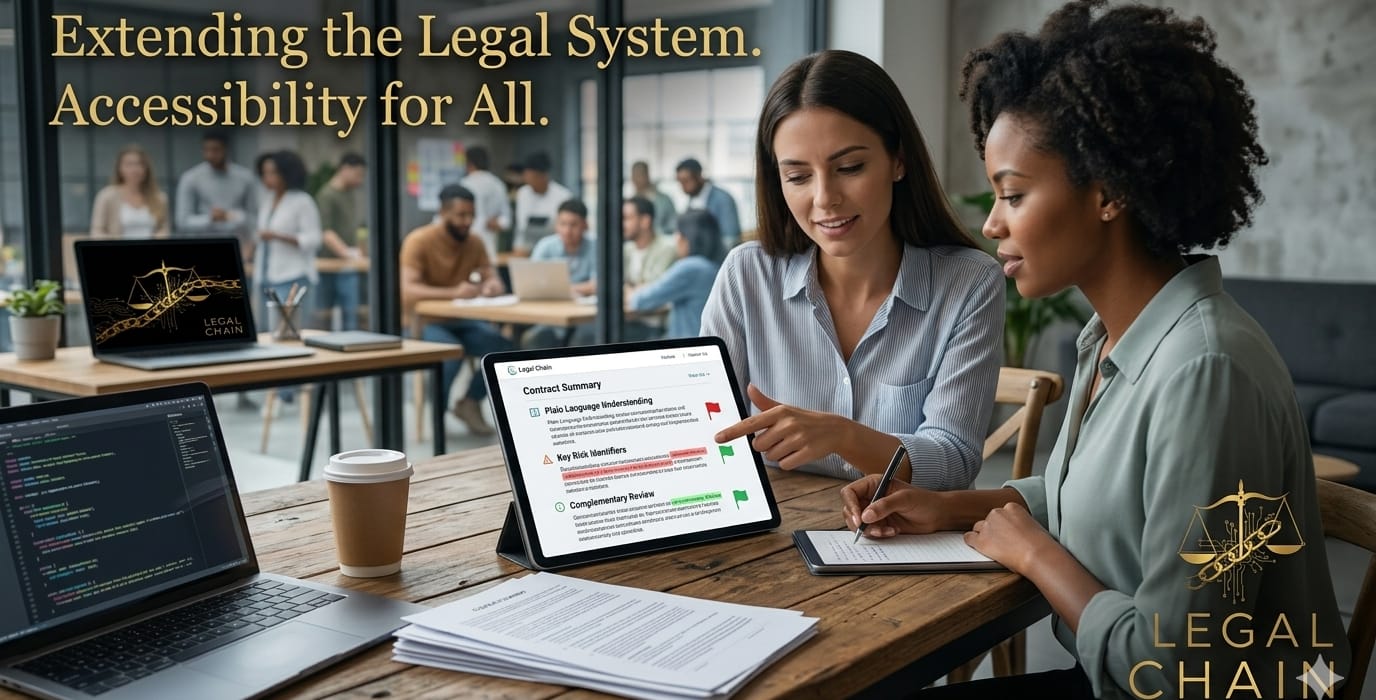
Legal Chain is built on a simple premise: legal clarity should be accessible to everyone.
The platform helps users:
- Understand contracts in plain language
- Identify key risks before signing
- Make faster, more informed decisions
Rather than replacing attorneys, Legal Chain is designed to complement them—creating a hybrid approach where users can understand first, then seek professional review when needed.
This model empowers both individuals and legal professionals, improving efficiency and reducing friction across the board.
The Future of Legal Access
The legal system doesn’t need to be rebuilt—it needs to be extended.
By improving accessibility, simplifying language, and leveraging technology responsibly, we can create a system that works for more people—not just those with resources.
Legal understanding should not be a privilege. It should be a standard.
Explore how Legal Chain is working toward that future at https://legalcha.in.
