The Decentralized Ledger: How Blockchain is Redefining Legal Trust
When discussing the future of law, the conversation often shifts toward automation. However, the most profound shift is not in speed, but in the creation of a universal trust layer. Blockchain technology is moving legal practice away from centralized silos toward a decentralized framework that provides unprecedented security and global connectivity.
The ‘Nuclear Key’ Protocol: Advanced Security for Critical Documents
In high-stakes legal environments, authorization is everything. Blockchain introduces advanced security protocols such as multi-signature (multisig) verification. Imagine a legal document that functions like a nuclear launch system: it requires two or more independent authorized parties to provide their cryptographic “keys” simultaneously before a transaction can be executed or a contract finalized.
This eliminate the risk of a single point of failure or unauthorized tampering. By utilizing these protocols, firms can guarantee that critical decisions—from estate disbursements to large-scale acquisitions—are only enacted with full, verified consent. For more on the technical side of this protection, see our guide on tamper-evident workflows.
Blockchain as the Global Notary
Perhaps the most practical application for the global economy is the ability for blockchain to function as a digital notary. Traditionally, getting a document certified for use in another country—a process known as an Apostille—requires weeks of administrative friction. It involves physical visits to embassies, government certification, and expensive international couriers.
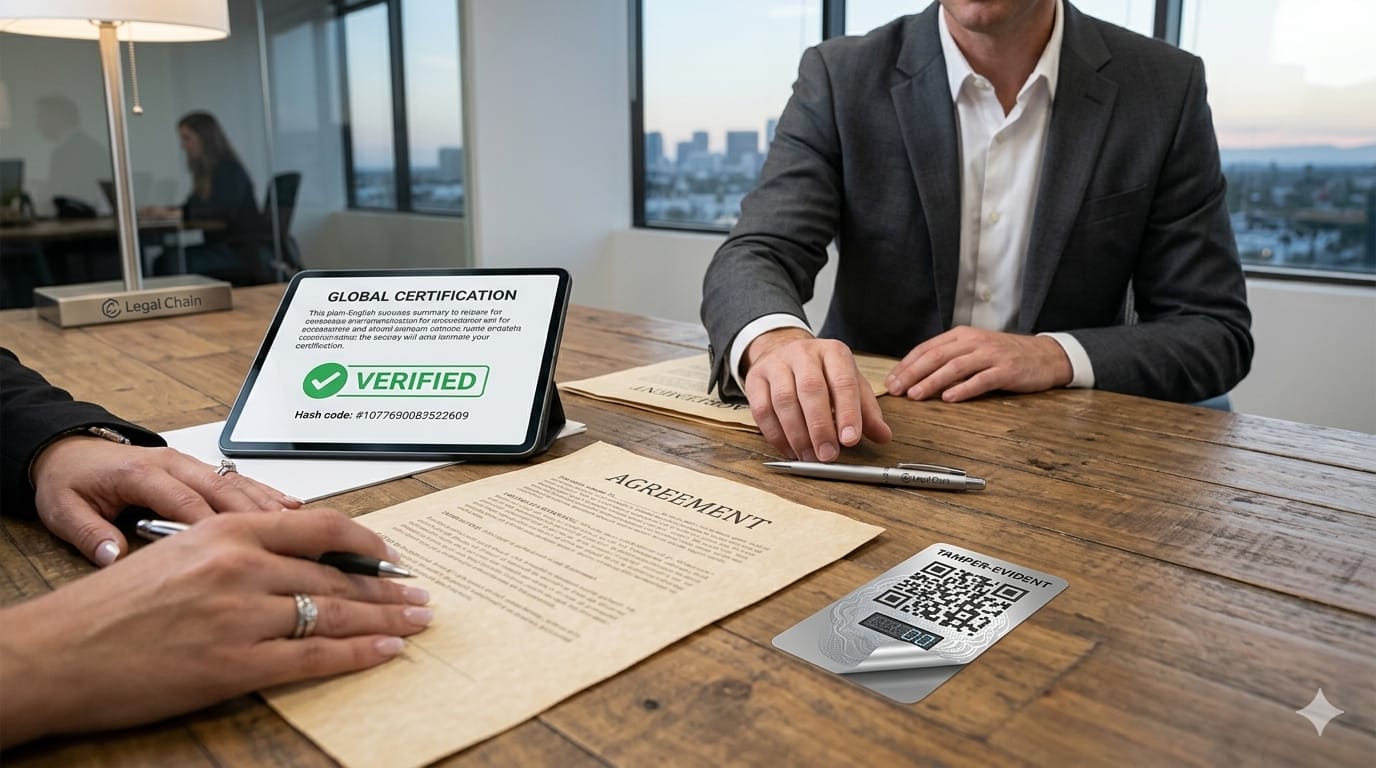
Blockchain removes these geographical barriers. By anchoring a document’s hash to a decentralized ledger, you can:
- Verify Authenticity Instantly: Parties on the other side of the world can verify the document’s origin without a third-party intermediary.
- Eliminate Snail Mail: Digital originals are verified mathematically, removing the need to send printed docs via post.
- Bypass Embassy Friction: Cryptographic certainty provides a level of trust that transcends national borders.
Bridging the Distance
At Legal Chain, we are building tools that utilize these decentralized protocols to bring the world closer together. Whether you are a startup expanding internationally or a nonprofit operating across borders, our Contract Management Services ensure that your documentation is not just digital, but globally defensible. We believe that legal clarity is the foundation for global progress, as explored in our post on the Clarity Gap.
Frequently Asked Questions
Is a blockchain signature legally binding?
Yes, in many jurisdictions, blockchain-based signatures fall under existing electronic signature laws, such as the ESIGN Act and UETA in the US, provided they meet specific intent and attribution requirements.
How does this help with international business?
It removes the need for physical document transport and embassy-level certification, allowing companies to execute cross-border agreements in minutes rather than weeks.
What makes blockchain more secure than a standard PDF?
A standard PDF can be edited without leaving a trace. A document anchored to a blockchain is immutable; any change to the file results in a mismatched hash, alerting all parties to the alteration.
Step into the future of legal trust: legalcha.in
